Posts

Uncovering Resilience to Alzheimer's Disease

Image
A recent publication highlights the discovery of the second case demonstrating exceptional resilience to autosomal dominant Alzheimer's disease (ADAD). This male patient, carrying a PSEN1-E280A mutation, remained cognitively intact until the age of 67, despite the presence of highly elevated amyloid plaque burden. Interestingly, the patient did not possess the protective APOE3 Christchurch variant but instead had a rare variant in the RELN gene (H3447R), termed COLBOS. This gain-of-function variant showed enhanced ability to activate its protein target Dab1, leading to reduced human Tau phosphorylation. These findings suggest a potential role for RELN signaling in resilience to dementia, highlighting the importance of genetic variants in ADAD protection.  The apolipoprotein E (APOE) gene, specifically the APOE ε4 allele, is the most well-established genetic risk factor for late-onset Alzheimer's disease. Inheriting one or two copies of the APOE ε4 allele increases the risk of d...

Brain decoder

Image
A study published today in journal Nature introduced a non-invasive semantic decoder based on functional magnetic resonance imaging (fMRI) and technology similar to the one powering ChatGPT. The decoder can convert a person's brain activity when they are listening to or silently imagine telling a story into a continuous stream of text. The method created by the team from the University of Texas at Austin may enable people to speak with their minds.  Given novel brain recordings, this decoder generates intelligible word sequences that recover the meaning of perceived speech, imagined speech and even silent videos, demonstrating that a single decoder can be applied to a range of tasks. And it can fruitfully work with multiple brain regions. This demonstrates the viability of non-invasive language brain–computer interfaces.  Computational task was performed by Generative Pre-trained Transformer (GPT), a 12-layer neural network using multi-head self-attention to combine represent...

Neuropathological Features of Age-Related Brain Diseases

Image
As we age, the structure and function of our brains can change, which may contribute to cognitive decline.  Analysis of donated brains  from 100 centenarians and 297 nonagenarians from the 90+ Study , allowed to compare the prevalence of 10 neuropathological changes related to dementia and cognitive performance. The figure graphically represents the prevalence of the individual dichotomized neuropathological changes in nonagenarians and centenarians. Compared with nonagenarians, centenarians had equal or slightly higher but not significant prevalence of all 10 individual neuropathological changes except large infarcts. Panel B shows the prevalence of the 10 neuropathological changes in centenarians and nonagenarians  and the odds of dementia associated with these changes. Among centenarians, the most common neuropathological change was arteriolosclerosis (88%), followed by ADNC ( Alzheimer's disease neuropathological change:  75%) and ARTAG ( Age-related tau astrogli...

Tuning brainwaves to improve learning

Image
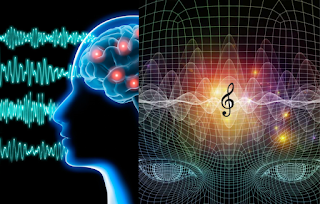
Neurons generate electric currents. Synchronized rhythmic patterns of electrical activity produced by neurons in the brain, aka large-scale neural oscillations also known as "brainwaves", can be monitored and graphically documented by an electroencephalogram (EEG). Each brain has its own natural rhythm. The functional role of neural oscillations is still not fully understood, but they have been shown to correlate with emotional responses, motor control, and a number of cognitive functions including information transfer, perception, and memory. Brainwave entrainment , also referred to as brainwave synchronization or neural entrainment, refers to the observation that brainwaves naturally synchronize to the rhythm of periodic external stimuli, such as flickering lights, speech, music, or things that can be felt with your skin - like feeling the air on a windy day or the warmth of a hug. As simplified by  ELI5 powered by ChatGPT, brain entrainment is a special kind of music that...

HippoCamera for Aging Brain

Image
Memory decline is common in aging and significantly worsens quality of life, but there are few, if any, effective interventions to improve episodic memory recall in older adults. And there are no effective interventions specifically targeting autobiographical episodic memory. A smartphone app called HippoCamera allows users to create memory cues of specific events that they personally value and hope to remember. These cues consist of a short verbal description and a short video recording of the event. The approach was shown to be effective tool for improving the recall of episodic memories in older adults. Seniors were able to improve their ability to recall episodic memories, increase the differentiation of hippocampal activity, and better remember the personal past. These findings suggest that using mobile phone technologies to record and replay episodic memories may be a feasible, low- cost, and effective way to improve memory recall in older adults (Adapted from SpinnerChef:...

Genetic Determinants of Aging and Longevity

Image
Aging is a natural process that all living things have to go through. It is characterized by the gradual loss of function and stability at the molecular, cellular, tissue, and organ levels. This process is often accompanied by the development of age-related diseases, such as cardiovascular disease, musculoskeletal issues, neurodegenerative diseases, and cancer. During the COVID-19 pandemic, the relationship between aging and the immune system became particularly important, as older individuals have a higher risk of developing serious complications and death from the virus compared to younger people. However, there have also been reports of 100-year-old individuals who have successfully survived COVID-19 (some mentioned in our recent paper ). The rate of aging and life expectancy can be influenced by various factors, including genetics, which is believed to account for up to 30% of the variation in human lifespan. It has been found that siblings of people who have lived beyond the age o...

AI and Natural Language Processing Offer New Opportunities for Early Diagnosis of Aging-Related Diseases

Image
Artificial intelligence (AI) could help improve the early detection of Alzheimer's disease (AD), according to a study by researchers at Drexel University. The study found that OpenAI's GPT-3 AI model could recognize early stages of dementia using spontaneous speech with almost 80% accuracy.  GPT-3, also known as the third generation of OpenAI's General Pretrained Transformer, is an artificial intelligence model that uses a deep learning algorithm to process and analyze large amounts of data. One of GPT-3's key strengths is its ability to perform "zero-data learning," which means it can understand text that would normally require external knowledge that has not been provided.  The researchers used algorithms to identify cues such as hesitation, grammatical and pronunciation errors, and forgetting word meanings. Such features are often used to determine whether patients should undergo a thorough check-up. The researchers trained the model using a large dataset e...