Posts

Showing posts with the label brain

Why Your Brain Needs Its Nightly Wash

Image
We all know how it feels after a bad night’s sleep — foggy brain, drifting focus, maybe even a short fuse. But new research shows what’s really happening inside your head during those moments: your brain may literally be trying to wash itself clean. While you sleep, a clear liquid called cerebrospinal fluid (CSF) flows rhythmically through your brain, washing away the waste that builds up during the day. This nightly rinse also helps rebalance neurotransmitters - the brain’s chemical messengers that regulate mood, focus, and emotion.  When you don’t get enough rest, your brain tries to compensate. Researchers at MIT recently found that during lapses in attention caused by sleep deprivation, waves of CSF flow out of the brain - almost as if your brain is sneaking in mini “cleansing naps.” But there’s a catch: these cleansing waves come at the cost of momentary attention failure. In other words, when you zone out after a sleepless night, your brain may literally be scrubbing itself -...

Brain vs RTX and LLMs: A Computational Showdown

Image
In the age of rapidly advancing technology, comparing the human brain to building blocks of a computer opens up an intriguing conversation. Both systems represent incredible feats of engineering—one through billions of years of evolution, the other through decades of technological innovation.  This image  that I came across on reddit  illustrates features of the brain vs a powerful graphics card like the NVIDIA RTX 4090. As of September 2024, the NVIDIA GeForce RTX 4090 remains one of the most powerful consumer GPUs available, especially for gaming and productivity tasks like rendering and AI workloads. It excels in 4K gaming and can handle even the most graphically demanding games, with exceptional performance in ray tracing and DLSS 3 technology, delivering up to 3-4x the performance of previous-generation GPUs like the RTX 3090 Ti. NVIDIA GeForce RTX 4090 is rumored to be  discontinued in October in preparation For Next-Gen RTX 5090 & 5090D GPUs, which c...

The Aging Brain: Exploring Cognitive Changes

Image
As we grow older, it's natural for our cognitive abilities to undergo some changes. These changes can manifest in various ways, including: Slower Processing Speed: It's common to experience a gradual decline in processing speed as we age. Tasks that once seemed effortless may take longer to complete, reflecting changes in information processing and neural efficiency.  Memory Challenges: Memory lapses become more prevalent with age, particularly episodic memory, which involves the recollection of specific events or experiences. While occasional forgetfulness is normal, significant memory impairment may indicate underlying cognitive issues. Executive Function Decline: Executive functions, which encompass abilities such as problem-solving, decision-making, and multitasking, may decline with age. This can impact daily activities that require planning, organization, and cognitive flexibility. The prevalence of non-dementia cognitive impairments in individuals 55-64 years old was as ...

Precision Nutrigeroscience: Nutrition for Longevity and Brain Health

Image
The pursuit of extended lifespan and improved health requires a deep understanding of the complex interplay between our diet and unique biological factors.  This is where precision nutrigeroscience emerges as a transformative approach, leveraging the power of biomarker identification and analysis to tailor dietary interventions. It embraces the diversity of human physiology, acknowledging that what works for one may not work for another, especially when it comes to nutrition. The varying impact of carbohydrates and fats on mortality is a testament to this complexity. Meat intake is linked to higher life expectancies, but the impact of carbohydrates and fats varies among individuals. While some thrive on higher carbohydrate diets, others may benefit from reduced carb intake. Similarly, the type of fats consumed (animal vs. plant-based) plays a significant role in health outcomes. The goal of precision nutrigeroscience is to decipher these individual needs and craft dietary recommend...

Cognitive Reserve and Healthy Aging: Insights from Sardinia's Oldest-Old

Image
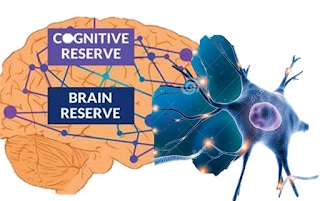
Ageing is an intricate journey marked by the ebb and flow of physical and cognitive capacities. As we advance in years, our bodies and minds undergo transformations, both subtle and profound. However, the ageing process is not uniform across individuals, and some extraordinary people manage to defy the odds, living well into their 90s and beyond. These individuals, known as nonagenarians and centenarians, offer a unique window into the mysteries of healthy aging. Sardinia's Blue Zone is renowned for its extreme longevity and unique characteristics—historical, geographic, social, linguistic, and nutritional. Within this captivating context, authors of a new study administered the Cognitive Reserve Index questionnaire (CRIq) and the short cognitive Esame Neuropsicologico Breve-2 (ENB-2) to 67 participants, all aged between 90 and 105 years old.  The study's findings provide compelling evidence of the positive relationship between cognitive reserve and cognitive performance, even...

Strategy Builds Youth's Focus, Puzzles Sharpen Seniors' Memory

Image
Games can be a valuable part of mental well-being at any age. A new study looked at how playing different types of video games affects people's ability to remember things and ignore distractions. The study included 209 young adults (18–30 years old) and 181 older adults (60–81 years old). Participants were asked about their gaming habits and then given a memory task. Here's what the researchers found: Young adults who mainly played strategy and action games were better at remembering things than non-players. But when looking more closely, only the strategy part of the games helped improve memory and the ability to ignore distractions. Action games didn't have the same effect.  Playing puzzle games helped older adults remember things just as well as younger adults. This suggests that puzzle games might be a useful way to keep the mind sharp for older people. This study provides an interesting insight into how video games, often seen as entertainment, can have practical bene...

Engaging All Senses: A Key to Brain Health

Image
The human body's sensory system is intricate and profoundly connected to cognitive function. From vision to hearing, smell, taste, and touch, engaging our senses is not just about experiencing the world around us; it's about preserving our mental well-being. Recent research  based on 2967 included participants showed that older adults with moderate to severe distance vision issues were 72 percent more likely to have dementia. This startling statistic underscores the importance of prioritizing vision health. It's more than just about seeing clearly; it's about optimizing both sight and overall mental health.  Hearing is another sense that has a profound impact on cognitive function. Untreated hearing loss has been associated with a higher incidence of dementia in older adults. Various hypotheses have been proposed to explain this link, from the diversion of cognitive resources to auditory processing to social isolation resulting from hearing loss. The latest aging resear...

Brain decoder

Image
A study published today in journal Nature introduced a non-invasive semantic decoder based on functional magnetic resonance imaging (fMRI) and technology similar to the one powering ChatGPT. The decoder can convert a person's brain activity when they are listening to or silently imagine telling a story into a continuous stream of text. The method created by the team from the University of Texas at Austin may enable people to speak with their minds.  Given novel brain recordings, this decoder generates intelligible word sequences that recover the meaning of perceived speech, imagined speech and even silent videos, demonstrating that a single decoder can be applied to a range of tasks. And it can fruitfully work with multiple brain regions. This demonstrates the viability of non-invasive language brain–computer interfaces.  Computational task was performed by Generative Pre-trained Transformer (GPT), a 12-layer neural network using multi-head self-attention to combine represent...

Tuning brainwaves to improve learning

Image
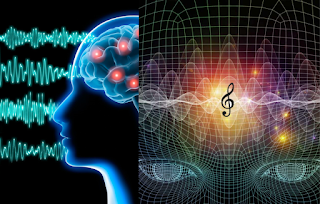
Neurons generate electric currents. Synchronized rhythmic patterns of electrical activity produced by neurons in the brain, aka large-scale neural oscillations also known as "brainwaves", can be monitored and graphically documented by an electroencephalogram (EEG). Each brain has its own natural rhythm. The functional role of neural oscillations is still not fully understood, but they have been shown to correlate with emotional responses, motor control, and a number of cognitive functions including information transfer, perception, and memory. Brainwave entrainment , also referred to as brainwave synchronization or neural entrainment, refers to the observation that brainwaves naturally synchronize to the rhythm of periodic external stimuli, such as flickering lights, speech, music, or things that can be felt with your skin - like feeling the air on a windy day or the warmth of a hug. As simplified by  ELI5 powered by ChatGPT, brain entrainment is a special kind of music that...