Posts

Do We Really Need Eight Hours of Sleep?

Image
For years, we’ve been told that adults need eight hours of sleep every night. But where did that number come from - and is eight really the magic number? The “eight hours” idea has roots in the 19th century, when the slogan of eight hours for work, eight for recreation, and eight for sleep became popular. Today, however, researchers are taking a closer look at how humans sleep without modern conveniences such as electric lights, alarm clocks, and late-night screens. Studies of some contemporary hunter-gatherer communities have found surprisingly short periods of measured nighttime sleep—roughly 5.7 to 7.1 hours in one set of observations. People often woke naturally around dawn and did not necessarily compensate with long daytime naps. This raises an interesting question: perhaps the timing and quality of sleep matter as much as the number of hours. But there’s an important caveat. These communities cannot simply be treated as a model for modern life. Their environments, daily activ...

Should You Stop Cracking Your Knuckles?

Image
Knuckle cracking is a common habit, but despite longstanding warnings, there is little evidence that it causes arthritis. One unusual experiment involved Donald Unger, who cracked the knuckles of one hand for about 50 years while leaving the other hand alone. When he eventually examined both hands, neither showed signs of arthritis. Larger studies have also found no meaningful connection between knuckle cracking and osteoarthritis. The familiar popping sound comes from changes inside the joint. Knuckles contain synovial fluid, which lubricates the joint. When you stretch or pull the joint, its space briefly expands, causing gases dissolved in the fluid to form bubbles. The resulting sound can be surprisingly loud, but the process itself is considered a normal part of joint movement. For most people, cracking their knuckles gently is harmless. Research has also failed to support claims that it causes permanently swollen knuckles, loose tendons, or weaker grip strength. However, forcing ...

The Age of Programmable Blood

Image
In laboratories this year, scientists achieved something that once belonged entirely to science fiction: the creation of human blood stem cells in the lab - the master cells capable of rebuilding the body’s blood and immune systems.  This fascinating breakthrough builds on a landmark 2024 study and pther earlier studies.  Scientists have been "growing" blood cells in labs for years. However, the reason the Australian team (led by Professors Andrew Elefanty and Ed Stanley) is calling this a landmark 2026 achievement is because they finally solved the "functional equivalence" problem.  The MCRI team successfully created hematopoietic stem cells (HSCs) that are functionally identical to those in a human embryo. Crucially, they proved these cells could successfully engraft and reconstitute a blood system in preclinical models. This was the "holy grail" that had eluded researchers for 25 years.  At first glance, it sounds like another medical milestone. B...

When Do Humans Really “Peak”?

Image
For decades, popular culture has pushed a simple narrative: we peak young - physically, mentally, and creatively - and then gradually decline. But lifespan psychology tells a much more nuanced story. A major 2025 review, Humans peak in midlife: A combined cognitive and personality trait perspective , synthesizes decades of research and arrives at a striking conclusion: there is no single age at which humans peak. Instead, different capacities crest at different stages of life - and overall functioning often reaches its high point in midlife.  Human development unfolds like overlapping waves rather than a single summit. Physical capacities peak earliest. Strength, endurance, and reaction speed tend to top out in the 20s and early 30s, when muscle mass, hormones, and recovery are at their highest. This is why elite athletic performance is concentrated in young adulthood. Fluid cognitive abilities peak young as well. Processing speed, working memory, and abstract reasoning generally...

Why Your Brain Needs Its Nightly Wash

Image
We all know how it feels after a bad night’s sleep — foggy brain, drifting focus, maybe even a short fuse. But new research shows what’s really happening inside your head during those moments: your brain may literally be trying to wash itself clean. While you sleep, a clear liquid called cerebrospinal fluid (CSF) flows rhythmically through your brain, washing away the waste that builds up during the day. This nightly rinse also helps rebalance neurotransmitters - the brain’s chemical messengers that regulate mood, focus, and emotion.  When you don’t get enough rest, your brain tries to compensate. Researchers at MIT recently found that during lapses in attention caused by sleep deprivation, waves of CSF flow out of the brain - almost as if your brain is sneaking in mini “cleansing naps.” But there’s a catch: these cleansing waves come at the cost of momentary attention failure. In other words, when you zone out after a sleepless night, your brain may literally be scrubbing itself -...

Breakfast O’Clock

Image
If you’ve been savoring your breakfast at the respectable hour of, say, 11:30 AM, science has some politely raised eyebrows for you. A new study from the University of Manchester followed nearly 3,000 older adults over three decades and found that as we age, our meals slowly start to drift later in the day - especially breakfast. And while that may feel like a well-earned retirement perk, there might be health consequences worth noting. The scientists tracked mealtimes from the 1980s through 2017, looking at breakfast, lunch, dinner, sleep habits, and health. They also peeked at participants’ genes to see if some folks are naturally more night-owl-ish. And here is the Big Bite-Sized Finding. Breakfast creeps later with age. On average, breakfast time got about 45 minutes later over the decades. Dinner also drifted later, while lunch stayed right where it was (because apparently lunchtime is sacred). Health struggles were tied to late meals. Fatigue, depression, anxiety, and even dental...

The Housing & Retirement Puzzle

Image
Retirement is no longer about slowing down—it's about shifting gears.  Gone are the days of working a 9-to-5 job for four decades, followed by a quiet life of leisure. Today’s retirees are embracing flexible work arrangements, phased retirements, and mini-retirements—all while seeking communities that support an active, engaged, and financially sustainable lifestyle. But there’s a problem: housing.   A severe shortage of homes in desirable areas, coupled with soaring prices, is forcing retirees into difficult choices. The intersection of housing policy and retirement trends is reshaping how and where people age, creating both challenges and opportunities. Research shows that retirees in well-designed active lifestyle communities report higher satisfaction levels - 93% compared to the 73% average [1]. These communities prioritize connection, wellness, and engagement, offering fitness centers, social clubs, and easy access to everyday conveniences. But despite their appeal,...

Aging, Cognition, and Money

Image
Aging is an inevitable process, bringing with it not only physical changes but also cognitive shifts that can profoundly influence everyday life. Two recent papers, "Are Older People Aware of Their Cognitive Decline? Misperception and Financial Decision Making" and "Ageing Populations, Financial Capability and Household Financial Decision Making in the Context of Neo-Liberal Social Policy Systems" , explore an under-discussed yet critical aspect of aging: how older adults perceive and manage financial decisions amidst cognitive decline and shifting household dynamics. These findings don’t just reveal gaps in individual awareness but also highlight broader systemic challenges tied to aging societies. One of the key findings of the first paper is that older adults often underestimate the extent of their cognitive decline . This misperception can lead to poor financial decision-making, particularly among those who were once active stock market investors. The research ...

Brain vs RTX and LLMs: A Computational Showdown

Image
In the age of rapidly advancing technology, comparing the human brain to building blocks of a computer opens up an intriguing conversation. Both systems represent incredible feats of engineering—one through billions of years of evolution, the other through decades of technological innovation.  This image  that I came across on reddit  illustrates features of the brain vs a powerful graphics card like the NVIDIA RTX 4090. As of September 2024, the NVIDIA GeForce RTX 4090 remains one of the most powerful consumer GPUs available, especially for gaming and productivity tasks like rendering and AI workloads. It excels in 4K gaming and can handle even the most graphically demanding games, with exceptional performance in ray tracing and DLSS 3 technology, delivering up to 3-4x the performance of previous-generation GPUs like the RTX 3090 Ti. NVIDIA GeForce RTX 4090 is rumored to be  discontinued in October in preparation For Next-Gen RTX 5090 & 5090D GPUs, which c...

The Dynamics of Aging Communities

Image
The world is aging rapidly, with life expectancy on the rise and the senior population growing at an unprecedented rate. By 2050, the number of Americans aged 85 and older is projected to triple, creating a pressing need for services and environments tailored to older adults. Master-Planned Communities (MPCs) designed for this demographic will play an increasingly critical role, serving as vital hubs for senior living and integrated care solutions. However, these communities face unique growth challenges that must be addressed to ensure they meet the evolving needs of their residents.  As these communities expand, it's essential to understand how growth forecasts influence lifestyle planning and overall community satisfaction. The evolution of retirement communities has been driven by both planned developments and naturally occurring retirement communities (NORCs), each offering different experiences for their residents. While NORCs develop organically as neighborhoods age, purpose...

Transforming Elder Care

Image
A recent paper published in Sensors ( May 2024 ) introduces a sophisticated wheelchair equipped with a brain-machine interface for intuitive control, and features such as stair climbing, posture adjustment, seat elevation, and user-friendly interaction. Ergonomics theory played a crucial role in determining the seat dimensions, ensuring comfort and usability. This intelligent wheelchair not only enhances mobility but also promotes independence and confidence among users.  Advanced AI tools are proving to be invaluable, offering adaptive support that enhances the effectiveness of caregivers and contributes to their well-being. This support ranges from monitoring patient health to providing decision support, thus reducing the burden on caregivers and improving care outcomes. A s ystematic review published in May 2024 emphasizes the importance of tailoring AI solutions to the specific needs of caregivers, whether they are assisting paralyzed patients or those with mental health issue...

The Aging Brain: Exploring Cognitive Changes

Image
As we grow older, it's natural for our cognitive abilities to undergo some changes. These changes can manifest in various ways, including: Slower Processing Speed: It's common to experience a gradual decline in processing speed as we age. Tasks that once seemed effortless may take longer to complete, reflecting changes in information processing and neural efficiency.  Memory Challenges: Memory lapses become more prevalent with age, particularly episodic memory, which involves the recollection of specific events or experiences. While occasional forgetfulness is normal, significant memory impairment may indicate underlying cognitive issues. Executive Function Decline: Executive functions, which encompass abilities such as problem-solving, decision-making, and multitasking, may decline with age. This can impact daily activities that require planning, organization, and cognitive flexibility. The prevalence of non-dementia cognitive impairments in individuals 55-64 years old was as ...

Precision Nutrigeroscience: Nutrition for Longevity and Brain Health

Image
The pursuit of extended lifespan and improved health requires a deep understanding of the complex interplay between our diet and unique biological factors.  This is where precision nutrigeroscience emerges as a transformative approach, leveraging the power of biomarker identification and analysis to tailor dietary interventions. It embraces the diversity of human physiology, acknowledging that what works for one may not work for another, especially when it comes to nutrition. The varying impact of carbohydrates and fats on mortality is a testament to this complexity. Meat intake is linked to higher life expectancies, but the impact of carbohydrates and fats varies among individuals. While some thrive on higher carbohydrate diets, others may benefit from reduced carb intake. Similarly, the type of fats consumed (animal vs. plant-based) plays a significant role in health outcomes. The goal of precision nutrigeroscience is to decipher these individual needs and craft dietary recommend...

Aging, Immunity, and the Final Chapter

Image
New study demonstrated an association between individual immune cell subsets and mortality in a nationally representative sample of older adults (> 55 years) in the United States. Adaptive immune subsets (total T cells), innate subsets (NK cells (CD56LO) and neutrophils) were associated with 4-year mortality even after adjustment for biological age and chronic subclinical inflammation. An increase in the percentage of total T cells, certain CD4+ T cells (called Tn), and a specific subset of natural killer cells (NK LO) was linked to a reduced risk of death. Another type of immune cell subset (DC-M) showed a potential decrease in mortality risk, but this finding wasn't statistically significant. On the other hand, an increase in CD4+ Tem cells, IgD- Mem B cells, and neutrophils was associated with an increased risk of death. After adjusting for multiple comparisons, the associations that remained statistically significant were total T cells, NK LO cells, and neutrophils. NK LO ce...

The Importance of Stable Blood Pressure in Aging

Image
In a recent study led by researchers from the University of South Australia (UniSA), scientists have uncovered the profound impact of fluctuating blood pressure on the cognitive health of older individuals, shedding light on the connection between blood pressure variations and the risk of dementia and vascular issues in the elderly.  High blood pressure is well-known as a risk factor for dementia, but the study underscores the importance of addressing the often-overlooked issue of fluctuating blood pressure in clinical treatments. To understand the mechanisms connecting blood pressure fluctuations with dementia, the researchers recruited 70 healthy older adults, aged 60-80, without cognitive impairment. They carefully monitored participants' blood pressure, conducted cognitive tests, and employed specialized techniques to measure arterial stiffness in the brain and arteries. The study unveiled a striking revelation: higher blood pressure variability, whether within a single day or ...

Cognitive Reserve and Healthy Aging: Insights from Sardinia's Oldest-Old

Image
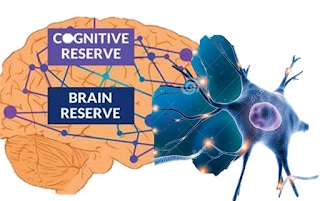
Ageing is an intricate journey marked by the ebb and flow of physical and cognitive capacities. As we advance in years, our bodies and minds undergo transformations, both subtle and profound. However, the ageing process is not uniform across individuals, and some extraordinary people manage to defy the odds, living well into their 90s and beyond. These individuals, known as nonagenarians and centenarians, offer a unique window into the mysteries of healthy aging. Sardinia's Blue Zone is renowned for its extreme longevity and unique characteristics—historical, geographic, social, linguistic, and nutritional. Within this captivating context, authors of a new study administered the Cognitive Reserve Index questionnaire (CRIq) and the short cognitive Esame Neuropsicologico Breve-2 (ENB-2) to 67 participants, all aged between 90 and 105 years old.  The study's findings provide compelling evidence of the positive relationship between cognitive reserve and cognitive performance, even...